
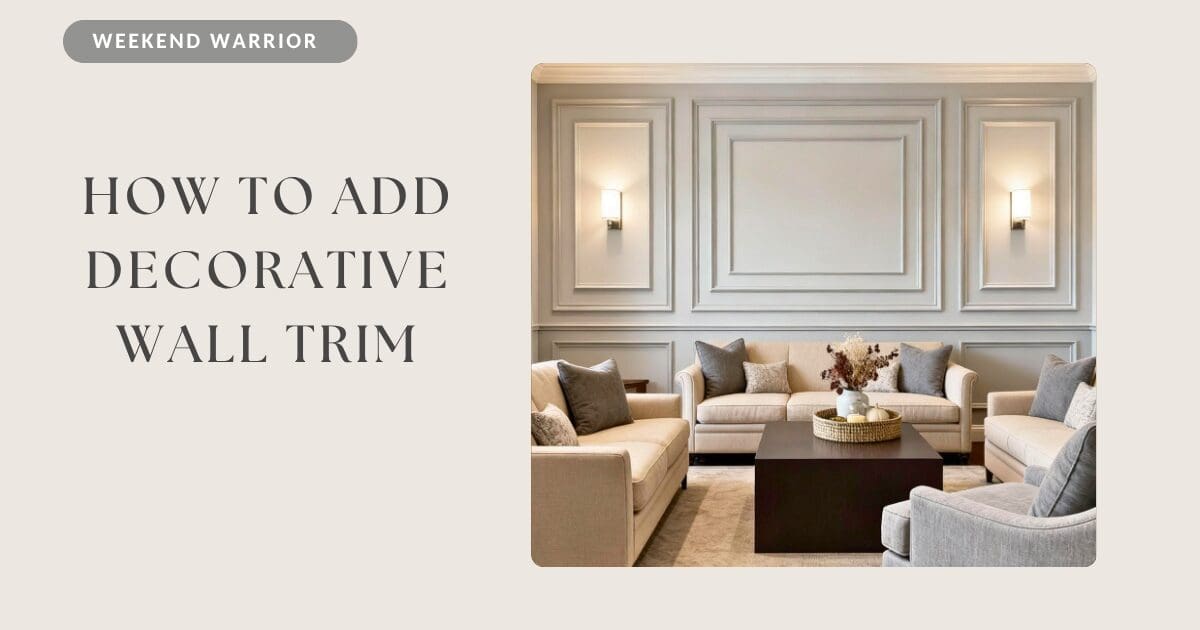
If you’re looking for a home project that makes a noticeable difference without taking over your entire weekend, decorative wall trim is one of the best places to start. Picture-frame molding, board and batten and applied molding can add architectural interest to an otherwise plain room, and many simple designs can be completed in a day.
Wall treatments are also having a moment. Designers are moving away from completely flat, minimal walls and toward spaces with more dimension, texture and character. Architectural Digest’s 2026 design forecast points to a growing interest in sculptural and three-dimensional wall treatments, while House Beautiful recently highlighted picture-frame molding, board and batten and applied molding as ways to give a room a more custom feel.
Choose the Right Style
Picture-frame molding is probably the easiest way to get a classic, elevated look. Thin molding is installed in rectangular “frames” across the wall, creating the appearance of traditional paneling. It works particularly well in dining rooms, living rooms, bedrooms and entryways.
Board and batten has a slightly more casual feel. Vertical strips of wood are spaced evenly along the wall, generally ending at a horizontal top rail. It can work especially well in mudrooms, hallways and bedrooms.
For something more dramatic, consider floor-to-ceiling molding or layered trim. Current design trends are also pulling inspiration from historic paneling and Art Deco, but pairing those details with simpler furnishings and contemporary art.
Make it a One-Day Project
The key is preparation. Decide on your pattern first and use painter’s tape to lay it out directly on the wall. This lets you adjust proportions before making any cuts.
For a straightforward picture-frame wall, you’ll need:
- molding
- a measuring tape
- level
- miter saw or miter box
- brad nailer or finishing nails
- wood filler
- caulk
- paint
Measure and cut the trim, attach it to the wall, fill the nail holes and caulk the seams. Once everything is dry, paint the trim and wall the same color for a seamless, built-in appearance.

Keep the Look Current
One of the easiest ways to keep decorative molding from feeling overly traditional is to simplify it. Use clean profiles, larger-scale rectangles and fewer panels rather than covering every inch of wall.
And don’t feel as though molding means you can’t hang artwork. Art can sit inside the molding, or even cross over it, making the trim more of an architectural backdrop than a decorating limitation.
For a relatively inexpensive project and one day of work, decorative wall trim can make a basic room feel considerably more finished and custom.