

Painting a room is one of the easiest and most cost-effective ways to refresh your home. Whether you’re updating your space for personal enjoyment or preparing it for resale, the right paint color—applied correctly—can completely transform how a room looks and feels.
Below is a step-by-step guide to painting a room, a simple breakdown of color theory, and today’s most popular room colors withbrand recommendations from Sherwin-Williams and Benjamin Moore.
Step-by-Step: How to Paint a Room
1. Prep the Room
Preparation is key to a professional-looking finish.
-
Remove artwork, outlet covers, and switch plates
-
Fill nail holes and cracks with spackle
-
Lightly sand patched areas
-
Clean walls to remove dust and oils
-
Tape trim, ceilings, and floors
Proper prep prevents peeling, streaks, and uneven coverage.
2. Choose the Right Paint Finish
-
Flat / Matte: Hides imperfections; best for ceilings and low-traffic rooms
-
Eggshell / Satin: Ideal for living rooms, bedrooms, and hallways
-
Semi-Gloss: Durable and washable; great for trim, kitchens, baths
-
High-Gloss: Bold and reflective; best for doors or accents
3. Prime When Needed
Use primer if:
-
Covering dark or bold colors
-
Painting over stains or repairs
-
Painting new drywall
Primer helps your final color look true and last longer.
4. Paint Strategically
-
Cut in around edges first
-
Roll walls in sections using a “W” pattern
-
Apply two coats, allowing proper drying time
Always paint during daylight to see undertones clearly.
Color Theory Basics (Why Color Feels the Way It Does)
Warm vs. Cool Colors
-
Warm tones (beige, taupe, terracotta): Cozy, inviting, energizing
-
Cool tones (blue, green, gray): Calm, serene, expansive
Warm colors work well in gathering spaces; cool colors shine in bedrooms and baths.
Light Reflectance Value (LRV)
-
Higher LRV: Makes rooms feel brighter and larger
-
Lower LRV: Adds depth and drama (best with good natural light)
Undertones Matter
A neutral paint can lean yellow, gray, pink, green, or blue. Always test paint on multiple walls and view it throughout the day before committing.
Trending Room Colors (With Brand Recommendations)

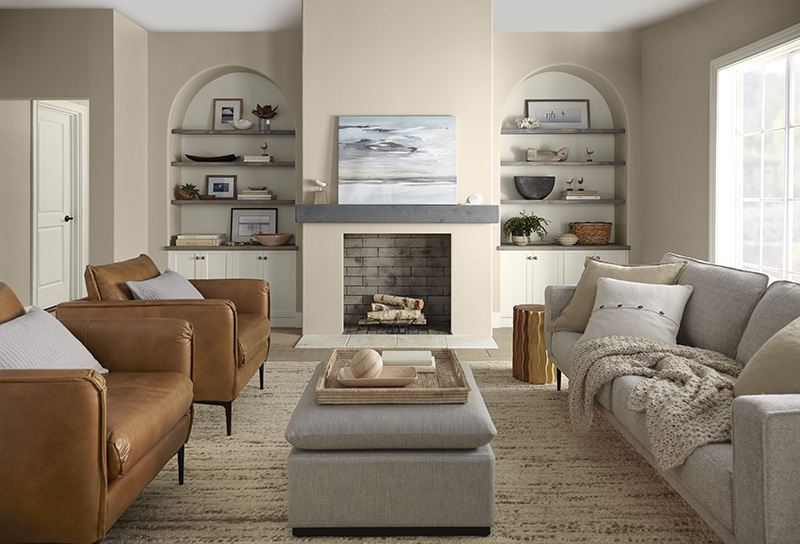
1. Warm Neutrals (The New Go-To)
Cool grays are fading, making room for soft, warm neutrals that feel timeless and inviting.
Sherwin-Williams:
-
Accessible Beige (SW 7036)
-
Shoji White (SW 7042)
-
Natural Linen (SW 9109)
Benjamin Moore:
-
White Dove (OC-17)
-
Edgecomb Gray (HC-173)
-
Ballet White (OC-9)
Best for: Living rooms, open floor plans, resale-friendly updates
2. Earthy Greens
Muted greens bring calm and connection to nature.
Sherwin-Williams:
-
Evergreen Fog (SW 9130)
-
Retreat (SW 6207)
-
Clary Sage (SW 6178)
Benjamin Moore:
-
Saybrook Sage (HC-114)
-
October Mist (1495)
-
Soft Fern (2144-40)
Best for: Bedrooms, home offices, kitchens
3. Moody Blues
Deep blues add sophistication and drama without overwhelming a space.
Sherwin-Williams:
-
Naval (SW 6244)
-
Indigo Batik (SW 7602)
-
Cyberspace (SW 7076)
Benjamin Moore:
-
Hale Navy (HC-154)
-
Gentleman’s Gray (2062-20)
-
Blue Note (2129-30)
Best for: Dining rooms, libraries, powder rooms
4. Greige (Still a Favorite)
Greige remains popular for its flexibility and broad appeal.
Sherwin-Williams:
-
Agreeable Gray (SW 7029)
-
Repose Gray (SW 7015)
Benjamin Moore:
-
Revere Pewter (HC-172)
-
Pale Oak (OC-20)
Best for: Whole-house palettes, hallways, transitional spaces
5. Soft Earth Tones & Warm Accents
Organic hues inspired by clay, sand, and stone are gaining traction.
Sherwin-Williams:
-
Redend Point (SW 9081)
-
Natural Tan (SW 7567)
Benjamin Moore:
-
Grant Beige (HC-83)
-
Pashmina (AF-100)
Best for: Accent walls, guest rooms, cozy nooks
A well-painted room does more than look fresh—it shapes mood, enhances space, and adds value to your home. With proper prep, a solid understanding of color theory, and tried-and-true paint colors from trusted brands, painting becomes one of the smartest upgrades you can make.
If you’re preparing your home for sale or want help choosing colors that appeal to today’s buyers while still feeling personal, I’m always happy to help guide the process.
1 Comment.
Hi I am so happy I found your weblog, I really found you by accident,
while I was browsing on Google for something else, Nonetheless
I am here now and would just like to say cheers for a incredible post and a all
round interesting blog (I also love the theme/design), I
don’t have time to go through it all at the minute but I
have bookmarked it and also added your RSS feeds,
so when I have time I will be back to read much more, Please do keep
up the fantastic job.