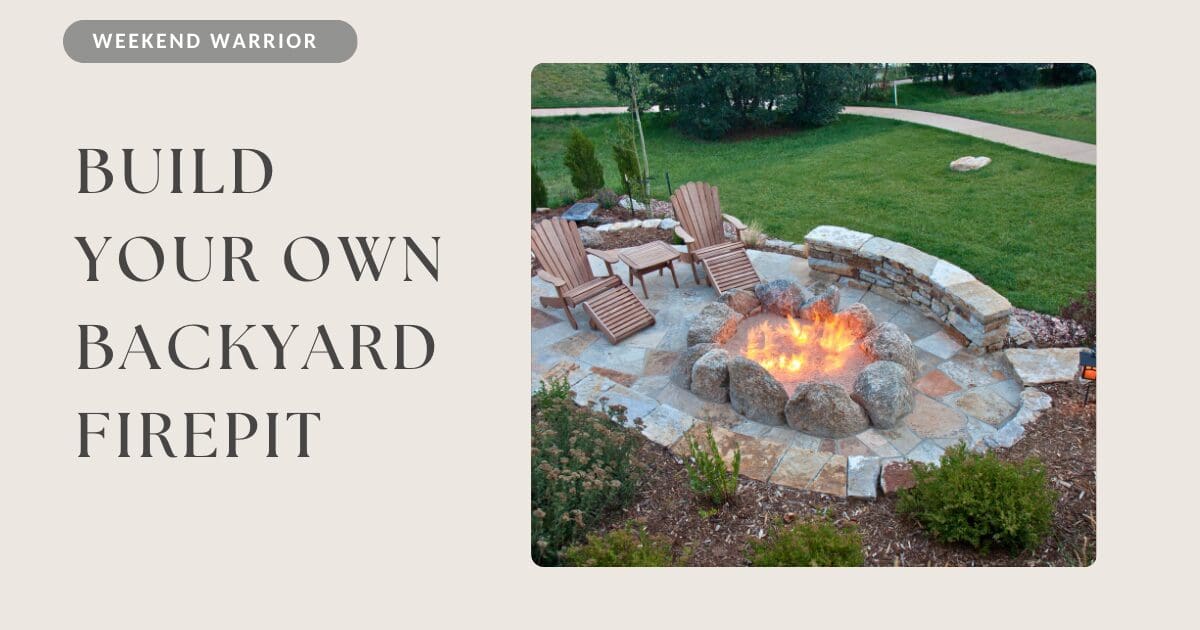
There’s something about a backyard firepit that instantly elevates a home. It creates a natural gathering space, extends your outdoor season well into fall, and adds a lifestyle feature buyers absolutely notice. The good news? You can build one yourself in a weekend with the right plan and attention to safety.
Below is a clear, step-by-step guide with important notes on fire code compliance.
Step 1: Check Local Fire Codes and HOA Rules
Before you buy a single stone, check your county’s fire regulations and HOA guidelines. In many Northern Virginia jurisdictions:
- Firepits must be at least 10–25 feet from structures, fences, and property lines (verify locally).
- Some areas require a spark screen.
- Open burning may be restricted during certain seasons or air quality alerts.
- HOA communities may regulate size, fuel type, or placement.
Always confirm current rules through your county fire marshal’s office and your HOA documents.
Step 2: Choose the Right Location
Select a level area:
- At least the required distance from your home and neighbors.
- Away from overhanging tree branches.
- Not directly under power lines.
- Clear of dry grass or heavy landscaping.
Think about wind patterns and seating flow. Ideally, the firepit should feel integrated into your outdoor living space, not dropped randomly in the yard.
Step 3: Decide on Size and Design
A common DIY size:
- 36–44 inches in interior diameter
- 12–18 inches tall
Round pits are most common and easiest to build. You can use:
- Concrete retaining wall blocks (designed for high heat)
- Fire-rated bricks
- A metal fire ring insert for added durability
Avoid standard concrete blocks not rated for heat; they can crack or explode under high temperatures.
Step 4: Mark and Excavate
- Use spray paint or a stake and string to mark your circle.
- Dig down about 6–8 inches.
- Remove grass and roots completely.
- Tamp the soil flat and level.
A solid base prevents shifting and cracking.
Step 5: Create the Base
- Add 2–3 inches of gravel and tamp down firmly.
- Add 2–3 inches of paver base or sand.
- Level carefully using a straight board and level tool.
This foundation is critical for long-term stability.
Step 6: Lay the First Course
- Place your first ring of blocks tightly together.
- Check level constantly.
- Adjust with sand as needed.
If using a metal insert, position it now to ensure correct spacing.
Step 7: Stack and Secure
- Stagger joints for strength.
- Use construction adhesive rated for outdoor/high heat use between layers.
- Build up to your desired height (typically 2–3 layers).
Step 8: Add Interior Protection
- Line the inside with a steel fire ring if you haven’t already.
- Add several inches of lava rock or fire-safe gravel to the base.
This improves drainage and protects the structure.
Fire Safety Best Practices
Even if compliant with code, follow these safety essentials:
- Keep a hose, bucket of water, or fire extinguisher nearby.
- Never leave a fire unattended.
- Burn only seasoned hardwood, no treated wood, trash, or yard debris.
- Fully extinguish fires before leaving (embers should be cool to the touch).
- Avoid use during high winds.
- Check daily burn restrictions during drought conditions.
A thoughtfully built firepit creates an outdoor “room.” It enhances lifestyle appeal, extends entertaining season, and adds emotional value for future buyers.
Need more inspiration? Check out more of the FOCUS on NoVA Real Estate’s design and maintenance tips.