For decades, Seven Corners has been known less as a destination and more as a pass-through—an auto-oriented intersection where Routes 7, 50, and Wilson Boulevard collide just outside Washington, D.C. Now, that image is beginning to shift. A series of long-planned redevelopment projects is slowly transforming Seven Corners into a denser, more walkable, mixed-use district, reflecting Fairfax County’s broader push toward transit-friendly growth.
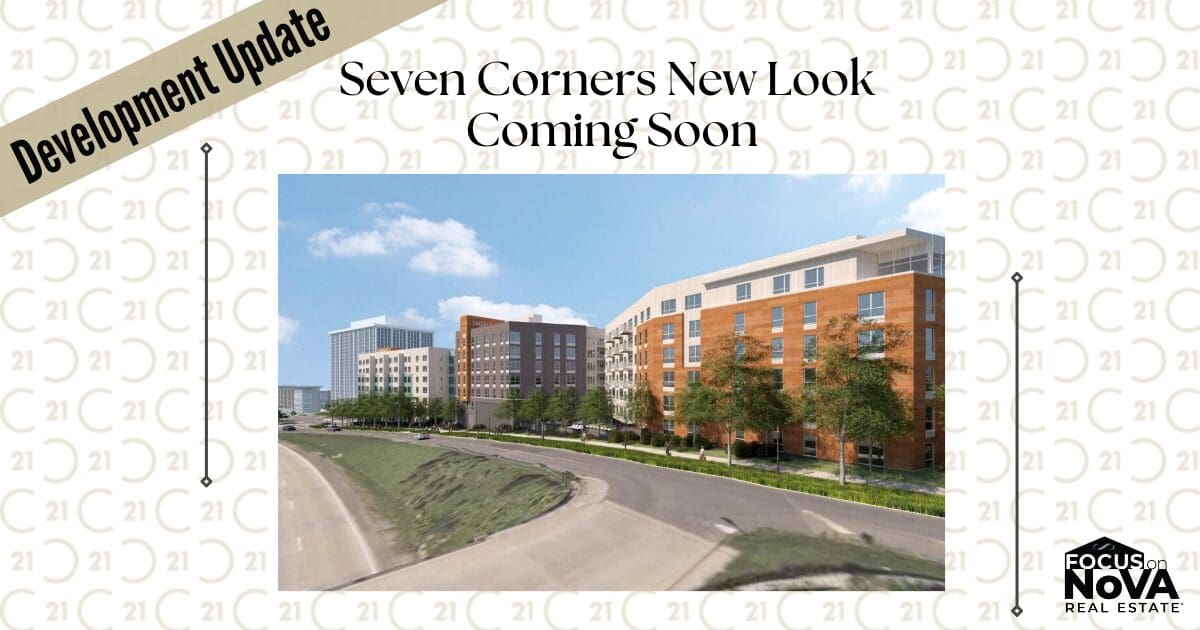
The most visible change is already underway. Construction continues on the redevelopment of the former Seven Corners Shopping Center, a site that once housed big-box retail and expansive surface parking. In its place, developers are building a multi-phase mixed-use project that will ultimately include several thousand residential units, new retail, office space, public plazas, and improved pedestrian connections. The first residential buildings and ground-floor retail are expected to deliver in phases through 2026, with later phases extending into the latter part of the decade.
Retail at Seven Corners is also evolving. Traditional large-format stores that once anchored the area have largely exited, either through closures or non-renewals, as leases expire and properties are repositioned for redevelopment. What replaces them is expected to be smaller-format retail, neighborhood-serving businesses, restaurants, and service-oriented tenants integrated into residential buildings, rather than standalone shopping centers.
One notable constant amid the change is Eden Center, the regionally significant Vietnamese shopping and dining destination. While Eden Center itself is not slated for redevelopment, surrounding infrastructure improvements—including road redesigns, safer crossings, and streetscape upgrades—are intended to better connect it to nearby residential and commercial projects.
Transportation improvements are a critical piece of the plan. Fairfax County has prioritized pedestrian safety and traffic reconfiguration in Seven Corners, an area long criticized for congestion and dangerous intersections. Planned and ongoing changes include redesigned ramps, new sidewalks and bike facilities, and reworked intersections aimed at reducing vehicle conflicts. These improvements are being rolled out incrementally alongside private development, rather than as a single, comprehensive overhaul.
Looking ahead, additional residential and mixed-use projects remain in the entitlement or planning stages, meaning visible construction will continue in waves rather than all at once. County officials estimate that full build-out of the Seven Corners redevelopment vision will take 15 to 20 years, reflecting both the scale of the area and the complexity of rebuilding around active roadways.
For nearby residents, the transformation will be gradual—but unmistakable. Seven Corners is shifting from a mid-century retail crossroads into a modern urban village, one project at a time.